
Bullbar vs Nudge Bar for Your Ute | Sunshine Coast
Bullbar vs Nudge Bar: Which Front Protection Is Right for Your Ute?
For Sunshine Coast ute and 4WD owners, choosing front protection should start with the vehicle’s real routine: everyday driving, work, regional travel or touring. A vehicle-specific setup can then be planned around the accessories and protection you genuinely need.
A front bar can change both the capability and appearance of a ute. It may provide a place to mount selected accessories, add front-end protection appropriate to the product’s design, or simply give the vehicle a more purposeful look. The question is not whether a bullbar or nudge bar looks tougher. The better question is: what does your ute need to do?
For some owners, a compact nudge bar is a practical choice for commuting and light accessory mounting. For others, a full bullbar makes more sense for regular regional travel, touring or a setup that needs to carry compatible driving lights, antennas and recovery equipment. The right answer depends on the ute, the way it is driven, the accessories planned and the requirements that apply to the exact vehicle.
Important: A nudge bar and a bullbar are not the same product. Their design, vehicle coverage, accessory capability and suitability vary. Never assume that any front bar will fit a particular ute or work with its vehicle systems. Select and fit a product specifically approved or engineered for the exact make, model and variant.
The practical difference between a bullbar and a nudge bar
A nudge bar is generally a smaller front-mounted bar. It commonly sits in front of the grille area and may offer a compact mounting point for light accessories where the design allows. It is often chosen by ute owners who want a lower-profile appearance and do not require the broader coverage or extensive accessory mounting offered by a full bullbar.
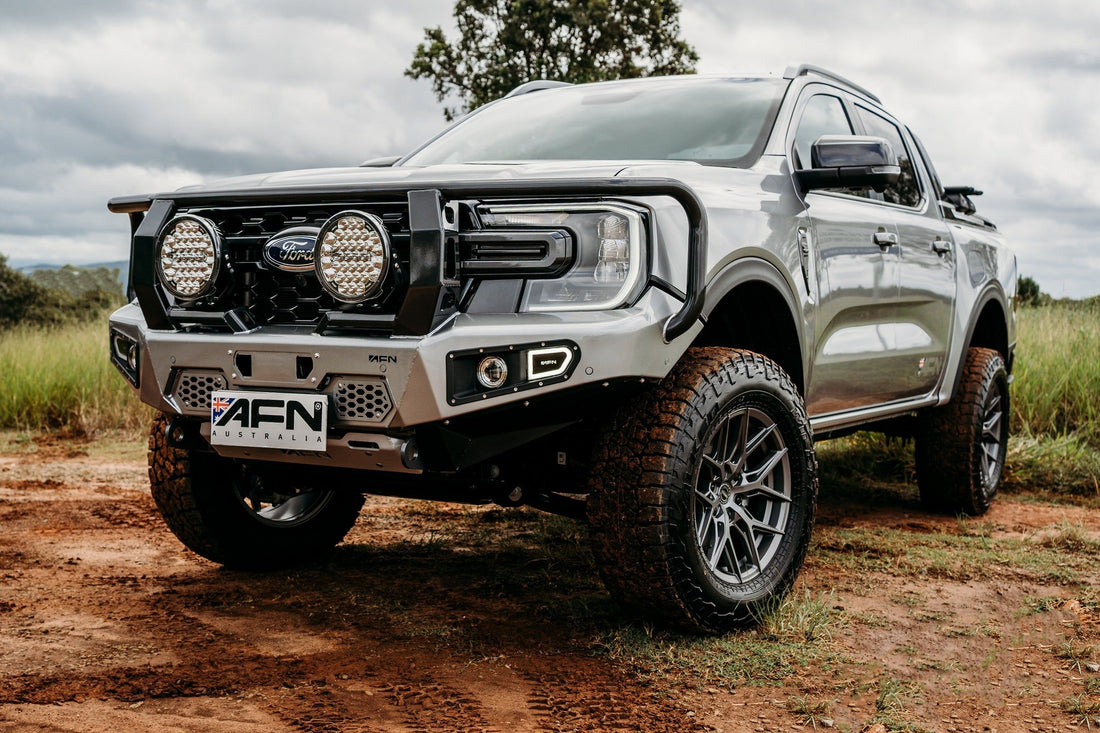
A bullbar is generally a more substantial front-protection system designed for a particular vehicle. Depending on the product and vehicle, it can cover more of the front end and may be engineered to carry selected accessories such as driving lights, UHF antennas or a compatible winch. The specific capability depends entirely on the manufacturer’s design and the exact vehicle application.
| Consideration | Nudge bar | Bullbar |
|---|---|---|
| Typical profile | Smaller and more compact in front of the grille. | Larger front-protection system with broader coverage. |
| Best suited to | Everyday driving, a subtle look and selected light accessory mounting where compatible. | Touring, regional use, work applications and more involved accessory setups where compatible. |
| Accessory options | Usually more limited; check the individual product. | May support more accessory options, but only where the specific bar is designed and rated for them. |
| Vehicle impact | Adds weight to the front axle; the actual effect varies by product. | Usually adds more weight than a nudge bar; the whole vehicle load plan must be considered. |
| Fitment decision | Must be vehicle-specific and compatible with all relevant systems. | Must be vehicle-specific and compatible with all relevant systems. |
The table is a guide, not a substitute for a product specification. Front bars can differ markedly in material, mounting system, approach angle, compatibility and accessory provisions. Assess the actual unit, not only the product label.
Choose based on how the ute is used
The most useful front-bar decision is made around real driving conditions. Be honest about the vehicle’s routine: city kilometres, site work, highway travel, early-morning starts, beach trips, regional roads, long-distance touring or remote travel. A setup that looks right on a showroom floor may not be the most practical choice for the job.
| How you use the ute | Questions to ask | Direction to explore |
|---|---|---|
| Daily driving around the Sunshine Coast | Do you want a lower-profile look and only modest accessory mounting? How much extra front-end weight is sensible for your build? | A vehicle-specific nudge bar may suit some owners. |
| Work and trade use | Will the ute frequently travel before dawn, carry tools or operate on regional roads? Are extra lights or antennas genuinely needed? | Compare nudge bar and bullbar options based on the actual accessories required. |
| Touring and longer regional travel | Will you carry a canopy, fridge, extra fuel, recovery gear or a touring load? Do you need a complete front-end accessory plan? | A compatible bullbar may be worth considering as part of the total build. |
| Off-road and recovery-focused use | Is the vehicle set up for technical tracks or remote travel? Does the bar have a verified provision for the recovery equipment you intend to use? | Start with a vehicle-specific bullbar and compatible recovery plan. |
A full bullbar is not automatically the best solution for every ute. It adds cost and mass, and it should earn its place in the build. Conversely, a nudge bar should not be chosen on appearance alone when the driver expects it to perform the role of a more substantial front-protection and accessory-mounting system.
Vehicle fitment and safety systems are non-negotiable
Modern utes include integrated vehicle systems and front-end components that must continue to function as intended after an accessory is fitted. That is why vehicle-specific fitment is essential. A front bar should be selected for the exact make, model, variant and model year—not simply because it appears to fit a similar ute.
Queensland’s vehicle-modification guidance explains that installed accessories must allow the vehicle to continue meeting applicable vehicle standards. It also notes that standards vary by vehicle category and year of manufacture.[1] Queensland Transport and Main Roads publishes specific information on bull bars and bullbar attachments; the current information sheet should be checked alongside the bar manufacturer’s instructions and the requirements for the vehicle.[2]
Ask the fitter to confirm the following before an order is finalised.
| Fitment question | Why it is important |
|---|---|
| Is this bar made for my exact ute variant and model year? | Small model differences can affect brackets, sensors, cooling, cameras and other components. |
| How does the bar work with the vehicle’s original safety equipment? | Compatibility must be confirmed for the exact product and vehicle. |
| Which accessories may be mounted to this specific bar? | Driving lights, antennas, aerials and recovery equipment need product-specific mounting provisions. |
| What is the finished front-end weight? | The bar, lights, winch and other equipment add mass that must be considered in the vehicle’s load plan. |
| Will any further work be needed? | This may include wiring, calibration or accessory-specific fitting requirements. |
A professional installation should follow the manufacturer’s instructions and use the vehicle-specific components supplied for the product. Avoid modifying mounting points, drilling or adding accessories in a way the manufacturer does not support.
Plan accessories with the bar, not after it
A front bar is often the foundation for later upgrades. If you expect to add driving lights, a UHF antenna or recovery equipment, decide that before choosing the bar. It is more efficient and safer to select one compatible system than to improvise mounting points later.
Driving lights
Driving lights can be useful for suitable conditions, but their mounting, wiring and aim must be carefully planned. Choose a bar with appropriate mounting points for the selected lights, and use a wiring solution that is compatible with the vehicle. Do not overload a bar or attach lights in a position the manufacturer has not approved.
UHF antenna
A UHF antenna can help with vehicle-to-vehicle communication in appropriate situations, including touring or convoy travel. Confirm that the antenna bracket and cable route are suitable for the bar and vehicle, and that the install does not interfere with operation, visibility or other equipment.
Winch and recovery equipment
Not every bullbar is a winch bar, and a nudge bar is not a substitute for a recovery-rated winch mounting system. If a winch is part of the build, use only equipment specifically designed, rated and fitted for the vehicle and intended recovery application. Recovery work can be hazardous; seek specialist advice and training before use.
Front-end weight affects the whole build
A bullbar, winch, driving lights and other accessories add weight ahead of the front axle. That weight has to be considered alongside the rest of the vehicle: canopy, tray, drawers, tools, passengers, fuel, batteries, roof load, towball load and touring gear.
This is why front protection should be planned with suspension and payload in mind. A ute that performs well empty may handle differently once it is fitted out for a job or a long trip. Queensland guidance identifies suspension upgrades and mass re-rating as significant modifications that must follow the relevant approved process and certification requirements.[1]
The most practical sequence is simple: list every accessory and load you expect to carry, confirm the vehicle’s limits, then choose compatible products. If a suspension or GVM upgrade is being considered, obtain vehicle-specific advice before ordering a pile of accessories.
The right questions before booking an installation
Use the following checklist to turn a general enquiry into a useful fitment discussion.
| Bring this information | Example |
|---|---|
| Exact vehicle details | Make, model, variant, model year and any existing modifications. |
| Primary use | Daily commuting, regional work, touring, beach travel or off-road use. |
| Planned accessories | Driving lights, UHF, winch, recovery points, aerials or a front camera solution. |
| Other build components | Canopy, drawer system, roof platform, batteries, long-range tank, trailer or caravan. |
| Future plans | Accessories you expect to add over the next 12–24 months. |
This information helps avoid the common mistake of fitting a bar that works today but becomes unsuitable once the rest of the ute build begins.
Bullbar and nudge bar fitting on the Sunshine Coast
The Ute Shop in Warana helps Sunshine Coast ute and 4WD owners assess front-protection options as part of a wider build. The team can discuss the vehicle, intended use and proposed accessories before recommending a vehicle-specific solution.
Explore the bullbar and vehicle-protection range, use the vehicle-fitment finder, or contact The Ute Shop to arrange a conversation about your ute.
Frequently asked questions
Is a nudge bar the same as a bullbar?
No. A nudge bar is generally smaller and more compact, while a bullbar is a more substantial front-protection system. Their coverage, weight and accessory capability differ by product and vehicle application.
Can I mount driving lights to any nudge bar or bullbar?
No. Only mount accessories where the exact product is designed and approved to carry them. Check the bar manufacturer’s instructions and use a vehicle-compatible wiring and installation solution.
Will a bullbar affect my ute’s payload or handling?
It adds weight to the front of the vehicle, and that weight must be considered in the overall load plan. The effect will depend on the bar, attached accessories and the rest of the build.
How do I know what will fit my ute?
Provide the exact make, model, variant and year, then confirm fitment with a qualified fitter and the product manufacturer. Do not rely on photographs of a similar vehicle.