
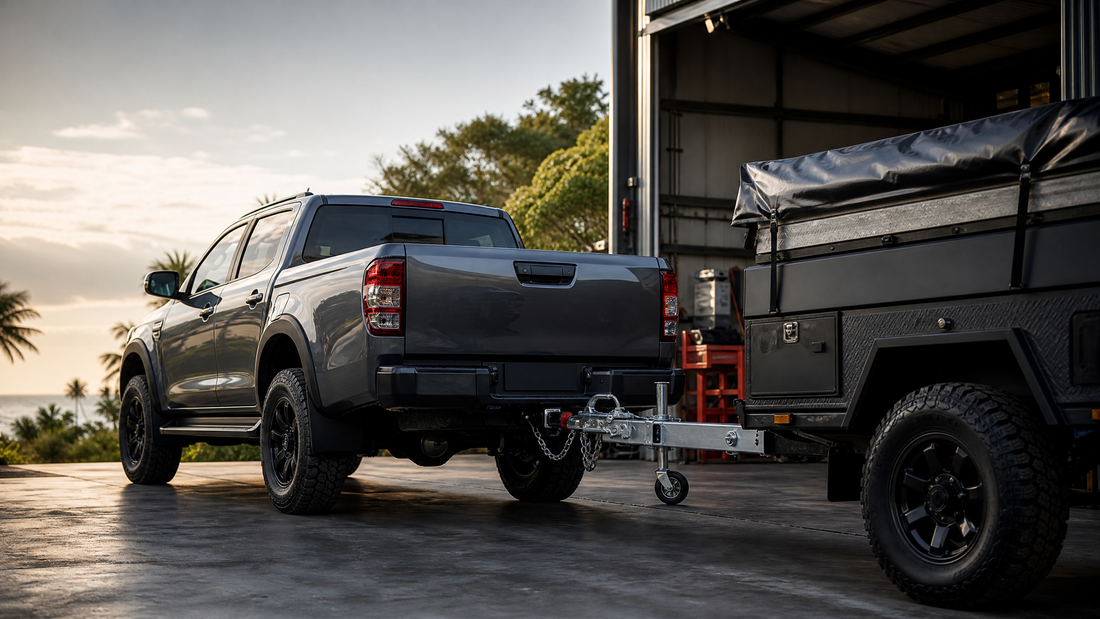
How to Choose the Right Towbar for Your Vehicle
How to Choose the Right Towbar for Your Ute: An Australian Buyer’s Guide
For Sunshine Coast ute owners, a towbar can turn a work or touring vehicle into a more capable setup for a trailer, boat or camper. The right result starts with matching the towing equipment to the exact vehicle and the way it will be used.
A towbar can turn a ute into a far more useful work and touring vehicle. It may be the link to a box trailer during the week, a boat on the weekend, or a camper trailer for a longer Queensland trip. However, choosing a towbar is not simply a matter of selecting the heaviest-looking unit or relying on the biggest towing figure in an advertisement.
The right setup has to suit the exact ute, the actual trailer, and the way the combination will be loaded and used. That includes the vehicle’s manufacturer limits, the loaded mass of the trailer, the towbar rating, towball load, wiring, coupling, brakes and the accessories already fitted to the vehicle. Queensland guidance makes the driver responsible for ensuring that the vehicle, trailer and couplings are safe and meet the applicable loaded-mass limits.[1]
This guide explains the questions worth answering before you book a towbar fitting or buy towing gear.
Important: This is general information only. Towing ratings and compliance requirements are vehicle-, trailer- and jurisdiction-specific. Always check the owner’s manual, compliance information and current requirements for your exact setup before towing.
Start with the vehicle—not the towbar
Every good towing decision begins with the ute manufacturer’s specifications. Find the towing information in the owner’s manual, on the vehicle information label where applicable, or through the manufacturer. The rated towing capacity is only one part of the picture. You also need to understand the vehicle’s Gross Vehicle Mass (GVM), Gross Combination Mass (GCM), axle limits and maximum permitted towball load.
Accessories and cargo count. A canopy, tray, drawers, fridge, dual-battery system, recovery gear, roof rack, tools, passengers and fuel all add weight to the ute. Queensland’s towing guidance specifically reminds drivers to account for passengers, equipment and vehicle modifications when assessing their load.[1]
| Item to check | Why it matters before choosing a towbar |
|---|---|
| Vehicle towing capacity | The loaded trailer must stay within the vehicle manufacturer’s rated limit. |
| GVM | The fully loaded ute, including passengers, accessories, cargo and towball load, must remain within its allowable mass. |
| GCM | The loaded ute and loaded trailer together must remain within the vehicle manufacturer’s combination limit. |
| Towbar rating | The towbar must be rated to carry at least the loaded mass of the trailer.[2] |
| Towball load | This is a separate limit that affects vehicle payload and axle loading. Confirm the applicable vehicle and towbar limits. |
| Trailer ATM and GTM | These trailer ratings help establish what the trailer can weigh when loaded and what weight is carried through the wheels. |
The numbers must work together. A ute may have a strong headline towing capacity but still run out of payload once a loaded canopy, passengers, gear and a meaningful towball load are included. If the figures are unclear, weigh the vehicle and trailer in the configuration you intend to travel with. Queensland Government guidance recommends using a public weighbridge when you are unsure of the combined mass of the trailer and its load.[1]
Match the towbar to the trailer and the job
Think about what you will tow most often, rather than what you might tow once. A small garden trailer, a work trailer, a tinny, a camper and a caravan can create very different load, coupling and electrical requirements.
A correctly selected towbar is designed for the particular vehicle and should be fitted with the appropriate hardware for the intended use. Its rating must be suitable for the loaded trailer—not simply the empty trailer. Queensland guidance also states that towbar attachments for safety chains must withstand the towbar’s rated load capacity.[2]
| Typical use | Questions to answer before fitment |
|---|---|
| Box or work trailer | What will the trailer weigh when loaded with equipment or materials? Does the lighting plug match the trailer? |
| Boat trailer | What is the realistic travelling weight including the boat, motor, fuel, safety equipment and gear? Is regular water exposure a factor for maintenance? |
| Camper trailer or caravan | What will it weigh with water, gas bottles, food, luggage and touring equipment on board? What towball load will it place on the ute? |
| Off-road trailer | Is the coupling suitable for the trailer and its intended conditions? Are the towbar, hitch, safety chains and electrical connections properly matched and rated? |
Do not assume one coupling style or one accessory suits every trailer. The safe connection is only as strong as the lowest-rated compatible component in the setup. A professional assessment should confirm the towbar, tongue or ball mount, coupling, safety-chain attachment points, trailer plug and any brake connection for the exact vehicle and trailer.
Wiring and trailer brakes deserve the same attention
The towbar is only one part of towing safely. The trailer’s brake lights, indicators and other required lighting need to operate correctly, and modern vehicles may need a dedicated wiring solution that suits their electrical system. Choose a harness that is designed for the vehicle and test the complete connection after fitting.
The trailer may also require braking equipment depending on its mass and configuration. That is not a detail to leave until the day of departure. Queensland guidance lists suitable brake connections, where required, as part of appropriate towing equipment.[1] If you are changing trailer size, buying a caravan, or moving from occasional light towing to regular touring, have the complete setup checked before you travel.
Choose a towbar style that suits real use
Towbar designs vary, and the best choice is the one that meets the vehicle and trailer requirements while fitting the way the ute is used day to day. Some owners prefer a fixed arrangement that is always ready for use. Others prefer a removable ball mount or coupling component when they are not towing, particularly where it may reduce the risk of a protrusion or improve rear access.
Queensland Government guidance notes that removable tow couplings can be taken off when not in use to avoid blocking the number plate and reduce the hazard to people walking behind the vehicle.[1] The decision should still be based on a compliant, vehicle-specific solution rather than appearance alone.
Consider the full build before you order
A towbar is often fitted after other upgrades, but towing performance depends on the whole vehicle. If you are planning a canopy and drawers, a long-range tank, auxiliary batteries, a roof load, heavier wheels and tyres, suspension work or a GVM upgrade, make the towbar part of the same planning conversation.
This is especially important for touring utes. A practical build starts with a realistic load plan, then selects accessories that suit it. Queensland Transport and Main Roads classifies accessories such as towbars and roof racks as minor modifications when the vehicle continues to meet applicable standards. More significant changes such as suspension upgrades and mass re-rating require the relevant compliance process and certification.[3]
A good installer will ask how the ute is used, what trailer is being towed, what weight is normally carried and which future upgrades are planned. That information is much more useful than choosing a towbar from a generic list.
Pre-trip towing checklist
Before every trip, take a few minutes to inspect the complete connection. The goal is not just to have a trailer attached, but to know that the vehicle and trailer are ready to travel as a single, stable combination.
| Check before departure | What to confirm |
|---|---|
| Loaded weights | The ute, trailer and combination remain within their applicable limits. |
| Coupling | It is fully engaged and locked in accordance with the coupling manufacturer’s instructions. |
| Safety chains | They are correctly connected to the appropriate attachment points and are not damaged. |
| Lights and electrics | Indicators, brake lights, tail lights and any brake-controller connection operate correctly. |
| Tyres and load restraint | Tyres are in sound condition and the load is restrained securely. |
| Mirrors and visibility | You have adequate rearward vision for the trailer you are towing. |
| Towbar and hardware | There is no visible damage, loose hardware or unexplained movement. |
Towing changes how a vehicle accelerates, brakes, turns and responds to crosswinds and passing traffic. Queensland guidance advises drivers to allow a longer stopping distance, use smooth steering and braking inputs, and account for the extra length and width of the trailer.[1] A careful pre-trip check supports safer decisions once you are on the road.
Towbar fitting on the Sunshine Coast
If you are towing from the Sunshine Coast, a vehicle-specific fitting assessment is the simplest way to avoid ordering the wrong gear or overlooking a weight issue. Bring the ute details, the trailer details and an honest description of how you load both. If you are unsure of the weights, arrange a weighbridge visit before finalising a touring or work setup.
The Ute Shop in Warana can help customers plan a towbar and towing setup around the vehicle, trailer and intended use. Use the vehicle-fitment finder to start your search, or contact the team to discuss a vehicle-specific assessment.
Frequently asked questions
Can I fit any towbar to my ute?
No. Towbars should be selected for the exact vehicle and fitted with compatible towing hardware. The vehicle’s towing limits, the loaded trailer mass and the towbar’s rating all need to align.[2]
Is the trailer’s empty weight enough to choose a towbar?
No. The relevant planning figure is the trailer’s real weight when loaded for the trip or job. That can be significantly higher than its empty weight once equipment, fuel, water, tools or camping gear are added.
Does a towbar increase what my ute can legally tow?
No. A towbar does not override the vehicle manufacturer’s towing, mass, axle or towball-load limits. The complete vehicle-and-trailer combination must stay within its applicable limits.[1]
Do I need a removable towbar?
Not necessarily. A removable component can be convenient when you are not towing, but suitability depends on the vehicle, trailer, towing hardware and intended use. Choose a compliant, compatible system rather than deciding on looks alone.